WalkSutra Physiotherapy
At first, it’s just back pain.
For many people, the moment they hear the words “Slip Disc”, fear takes over.
“Will I need surgery?”
“Should I stop walking?”
“Will this problem stay with me forever?”
These concerns are completely understandable.
But the good news is that not every slipped disc requires surgery, and not every MRI finding explains a person’s symptoms.
At WalkSutra, we believe that successful rehabilitation begins with understanding the person, the symptoms, and the way the spine is functioning—not just the MRI report.
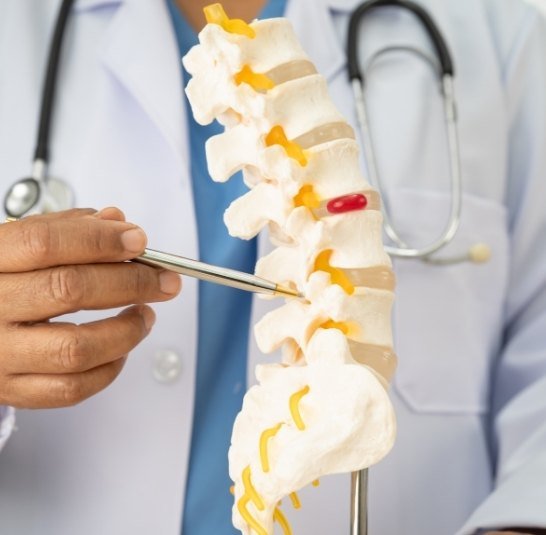
A slipped disc, also known as Prolapsed Intervertebral Disc (PIVD) or a lumbar disc herniation, occurs when part of the spinal disc moves beyond its normal position and may irritate or compress nearby nerve structures. However, the size of the disc on an MRI does not always predict the level of pain or functional limitation. This is why a detailed clinical assessment is essential before planning treatment.
Every rehabilitation journey begins with a comprehensive spinal and functional assessment.
We evaluate posture, spinal mobility, movement quality, nerve mobility, muscle strength, flexibility, core stability, walking pattern, balance, neurological findings, and the everyday activities that trigger or relieve your symptoms.
Instead of asking only,
“Where does it hurt?”
We ask,
“Why is your spine under stress, and what is preventing it from moving efficiently?”
Because long-term recovery depends on restoring healthy movement—not simply reducing pain.

Our rehabilitation programmes combine evidence-informed spine physiotherapy, spinal stabilisation exercises, movement re-education, neural mobilisation where appropriate, core strengthening, flexibility training, posture correction, gait retraining, ergonomic advice, activity modification, and personalised home rehabilitation programmes.
When clinically appropriate, advanced rehabilitation technologies may be incorporated to complement active rehabilitation. These may include Class IV Laser Therapy, TECAR Therapy, Spinal Decompression Therapy (where indicated), Functional Electrical Stimulation (FES), Neuromuscular Electrical Stimulation (NMES), robotic rehabilitation for selected neurological presentations, digital movement analysis, and other evidence-informed modalities that support recovery while encouraging active participation.
Technology is not a shortcut to recovery.
It is a tool that supports the rehabilitation process when used alongside skilled clinical assessment, therapeutic exercise, and patient education.
Recovery from a slipped disc is rarely about prolonged bed rest.
In fact, for many people, gradually returning to safe, guided movement is an important part of rehabilitation. The right exercises, performed at the right time and tailored to the individual, can help restore confidence, improve function, and support recovery.
At WalkSutra, we celebrate every milestone.
It is about helping you regain confidence in your spine and the freedom to move without fear.
Every rehabilitation programme begins with understanding how your spine moves, how your nerves function, and how your symptoms affect everyday life—not just what your MRI report shows.
No two slipped discs behave the same way. Your programme is tailored to your symptoms, examination findings, daily activities, and recovery goals.
Our rehabilitation combines current clinical evidence with movement science, therapeutic exercise, and functional rehabilitation to help improve mobility, reduce nerve irritation, and restore spinal function.
When clinically appropriate, rehabilitation may incorporate Class IV Laser Therapy, TECAR Therapy, Spinal Decompression Therapy, Functional Electrical Stimulation (FES), Neuromuscular Electrical Stimulation (NMES), digital movement analysis, and other technologies to complement active rehabilitation.
Recovery is not just about today’s pain. We help you build strength, improve posture, optimise movement, and develop healthy habits that support long-term spinal health and reduce the likelihood of future episodes.
A slipped disc can make even the simplest movements feel difficult.
But pain should never define the way you live.
Whether your symptoms began yesterday or have been affecting you for months, our rehabilitation team is here to help you understand the cause, restore healthy movement, and support your recovery with evidence-informed, personalised care.
Book your comprehensive Slip Disc (PIVD) assessment at WalkSutra and begin your journey towards stronger movement, greater confidence, and lasting spine health.